
Thorough Inspections
We conduct detailed inspections to identify any issues with your gas lines, ensuring that all potential problems are addressed.
Our gas line repair service includes comprehensive inspections, repairs, and necessary replacements to ensure your gas lines are safe and functional.
We conduct detailed inspections to identify any issues with your gas lines, ensuring that all potential problems are addressed.
Our team specializes in repairing leaks, using high-quality materials to ensure a long-lasting solution.
We ensure all repairs comply with local codes and safety regulations, providing peace of mind for homeowners.
After repairs, we perform safety tests to ensure your gas lines are leak-free and functioning correctly.
Not all gas pipe is the same, and the right material depends on where the pipe runs. Inside the home, the two common choices are traditional black iron pipe and corrugated stainless steel tubing, known as CSST. Underground, polyethylene pipe — often called poly pipe — is the modern standard. Each has strengths that suit its application, and a well-planned replacement uses each where it performs most reliably.
Black iron has been the workhorse of indoor gas piping for generations. It is rigid, durable, and familiar to every gas technician. Joints are threaded and sealed, and the pipe handles the pressures of residential gas service with a wide margin. Its main enemy is corrosion in damp locations, which is why it belongs indoors and above ground, protected from soil and standing water. In dry attics and interior walls, black iron routinely serves for decades.
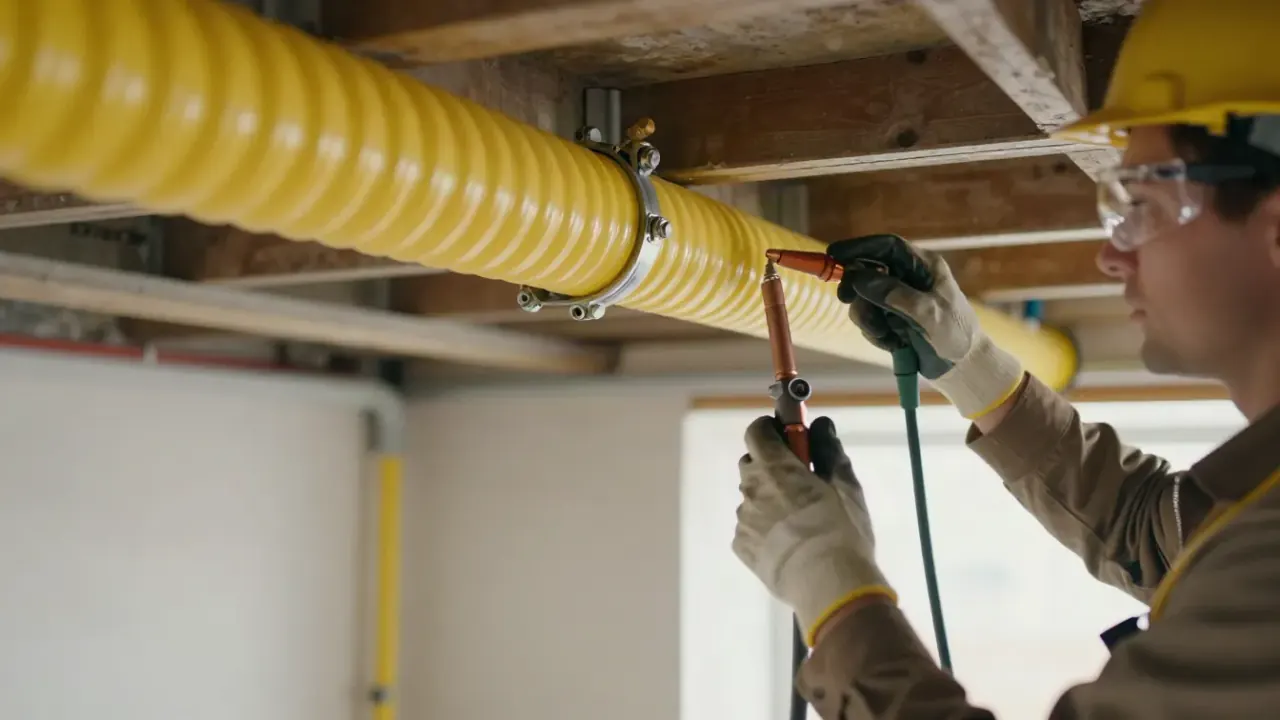
CSST is a flexible stainless steel tubing that can be snaked through walls, attics, and crawl spaces with far fewer joints than rigid pipe — and every joint eliminated is a potential leak point eliminated. It installs faster in retrofit situations and is a strong choice for re-piping existing homes where opening walls should be kept to a minimum. It does require proper bonding to the home's electrical grounding system, which a qualified installer handles as part of the job. Underground, polyethylene pipe has largely replaced steel for new installations: it does not corrode, it flexes with soil movement instead of fighting it, and it is joined by heat fusion that creates a continuous, joint-free run.
For the interior portions of a replacement — the runs from the meter through the house to the furnace, water heater, range, dryer, and fireplace — the choice usually comes down to black iron or CSST, and often a combination. Black iron is the traditional choice for straight, accessible runs: along a basement or crawl space ceiling, through an unfinished utility area, or anywhere the pipe will be visible and reachable. Its rigidity is an advantage where the pipe needs to hold its position and support valves and drip legs.
Replacement does not always mean replacing everything. The scope should match the condition of your system, and an honest assessment often lands on one of two scopes: full replacement of the gas piping system, or partial replacement of the sections that are failing. Understanding the difference helps you evaluate any recommendation you receive.
A full replacement — sometimes called a re-pipe — takes the gas system back to like-new condition from the meter through every branch. Every run of old pipe comes out, every joint is new, and the entire system is sized, installed, and tested to current standards. This is the right call when the original piping is uniformly aged, when corrosion or damage shows up in multiple areas, or when a homeowner simply wants the decades-long peace of mind of a completely new system. It is the bigger project, but it resets the clock entirely.
A partial replacement targets the failing portion and leaves sound pipe in place. The most common partial jobs in Flower Mound are the underground run from the meter to the house, a corroded riser assembly, or one branch of interior piping that has deteriorated while the rest tests fine. Partial replacement costs less and disrupts less of the home, and it makes sense when the assessment clearly shows the remaining pipe is in good condition. The key is that the remaining pipe must actually be evaluated — not assumed to be fine — before it is left in service.
A full re-pipe is a planned project, not an emergency scramble. It typically starts with the gas shut off at the meter and the existing system mapped — every branch, valve, and appliance connection documented so the new layout covers everything the old one served. Permits are pulled with the city, since gas piping work generally requires one in Southeast Texas municipalities, and the work is scheduled so the inspection can follow promptly.
Knowing what to expect takes the mystery out of a replacement project. While every home is different, the sequence is consistent: assessment and planning, permits, installation, testing, inspection, and restoration. Most residential replacements are completed in a matter of days rather than weeks, and your technician should walk you through the schedule before work begins.
The project starts with mapping. The technician documents every gas appliance and fixture in the home — furnace, water heaters, range or cooktop, dryer, fireplaces, outdoor kitchen, pool heater, standby generator — and traces how the existing piping serves them. This map becomes the plan for the new system, including pipe sizing. Sizing matters because every appliance draws a certain volume of gas; the pipe must be large enough to supply all of them at once without pressure drop. If you are thinking about adding a gas appliance in the future, this is the time to mention it — upsizing a run during replacement is far cheaper than doing it later.
Permits come next. In Flower Mound and the surrounding cities, gas piping work typically requires a permit from the building department, and the finished work must pass inspection. We handle the permit application as part of the project and schedule the inspection when the installation is complete. During installation, the gas stays off — plan for the furnace, water heater, and stove to be out of service for the duration. Most homeowners schedule the work for mild weather and plan meals accordingly; your technician will give you a realistic timeline so you can prepare.
Good preparation prevents delays. Before installation day, the technician confirms the full appliance list, verifies access to attics, crawl spaces, and utility areas, and identifies where the new pipe will run. For underground sections, the route is planned to avoid other utilities — the 811 locate service marks public lines, and the technician accounts for private lines like sprinkler systems and landscape lighting based on what you tell them and what is visible.
01
What we do: Contact us immediately for gas line repair in Flower Mound. Our technicians will locate and fix the leak quickly.
→ This ensures your home is safe and eliminates the risk of gas exposure.
02
What we do: Our team will inspect the gas lines and connections to identify any issues affecting performance.
→ You'll enjoy improved efficiency and reliability from your gas appliances.
03
What we do: We provide gas line servicing in Flower Mound to ensure safe and efficient installations.
→ This guarantees that your new appliances operate safely and effectively.
Gas Line Repair in Flower Mound requires an understanding of local building codes and common issues faced by residents. The humid climate can lead to corrosion in gas lines, making regular inspections essential. Our team is familiar with the unique challenges of the area, ensuring effective and compliant repairs. With gas line servicing in Flower Mound, we address issues promptly to maintain safety and efficiency.
Bridlewood
This neighborhood often experiences gas line issues due to older infrastructure.
Parker Square
Residents here benefit from our prompt gas line repair services, especially during extreme weather.
Lake Forest
We provide thorough inspections to ensure safety in homes with aging gas lines.
High humidity levels in summer
This can accelerate corrosion in gas lines, necessitating regular inspections and repairs.
Frequent temperature fluctuations in winter
These fluctuations can lead to pipe expansion and contraction, increasing the risk of leaks.
Our gas line repair services address common issues that can pose risks to your home and family.
Problem
Ignoring gas leaks can lead to dangerous situations, including explosions or health hazards from inhalation.
Our Fix
Our team quickly identifies and repairs leaks, ensuring your gas lines are safe and compliant with local regulations.
Problem
Faulty connections can lead to inefficient appliance operation and increased energy costs.
Our Fix
We repair and replace faulty connections, improving appliance efficiency and reducing energy bills.
Problem
Pressure drops can affect appliance performance, leading to inadequate heating or cooking.
Our Fix
We diagnose and fix pressure issues, ensuring your gas appliances operate at optimal levels.
Investing in gas line repair offers numerous advantages that enhance safety and efficiency.
Enhanced Safety
Regular gas line repair significantly reduces the risk of dangerous gas leaks. By addressing potential issues early, homeowners can prevent hazardous situations and ensure their family's safety.
Increased Efficiency
Properly functioning gas lines improve the efficiency of your appliances. This can lead to lower energy bills and a more effective heating system, especially during the colder months in Flower Mound.
Longer Lifespan
Timely gas line servicing in Flower Mound can extend the lifespan of your gas appliances. By addressing wear and tear, you ensure that your systems function optimally for years.
Compliance with Codes
Gas line repairs ensure compliance with the National Fuel Gas Code (NFGC) and local regulations. This is crucial for avoiding fines and ensuring your home passes inspections.
Gas line repair costs in Flower Mound typically range from $180 to $450 in 2026, depending on the complexity of the repair. Factors such as the extent of damage, materials used, and labor involved can affect the final price. Our transparent pricing ensures you know what to expect before we start any work.
Typical Investment Range
$180 - $450 depending on scope
Our pricing reflects the quality of service and materials used, ensuring long-lasting repairs.
What changes the price
Extent of Damage
More extensive damage requires more materials and labor, increasing costs.
Materials Used
The type of piping and fittings required can impact the overall repair cost.
Labor Intensity
Complex repairs that require more time and expertise will cost more.
Google ★★★★★4.9
Quick response and professional service! They fixed my gas leak within hours. Highly recommend!
Yelp ★★★★★4.8
Excellent service! The team was knowledgeable and friendly. They explained everything clearly.
BBB ★★★★★4.7
Very satisfied with the gas line repair. They were prompt and thorough in their work.
With local experience in gas line repair, our team is equipped with the necessary skills and certifications to handle any gas-related issue.

Real experiences from customers who chose our Gas Line Repair services.
“I had a gas leak in my home, and the team responded quickly. They were professional and resolved the issue within hours. Highly recommend!”
Sarah T.
Homeowner, Flower Mound
“Their gas line repair service was excellent. They explained everything and worked efficiently. I felt safe knowing my gas lines were in good hands.”
Mark L.
Business Owner, Lewisville
“I appreciated their 24/7 emergency service. When I had a problem late at night, they were there within an hour. Great service!”
Emily R.
Resident, Highland Village
Replacement is usually the right call when leaks keep recurring, when corrosion or damage shows up in multiple places, or when the piping is decades old and an inspection finds it deteriorating throughout. A single failed fitting on an otherwise sound system is a repair job. A technician who has inspected your system can show you exactly which sections are failing and explain why replacement makes more sense than another patch.
Black iron is rigid steel pipe used for indoor gas runs — durable and traditional. CSST is flexible stainless steel tubing that can be routed through walls and attics with far fewer joints, making it ideal for re-piping finished homes. Polyethylene is a corrosion-proof plastic pipe used underground, where it resists soil moisture and flexes with ground movement. A complete replacement often uses each material where it performs most reliably.
In most Southeast Texas municipalities, including Flower Mound, gas piping work requires a permit from the building department, and the finished installation must pass inspection before the gas utility restores service. We handle the permit application as part of the project and coordinate the inspection when the work is complete, so you do not have to navigate the process yourself.
The gas stays off for the duration of the installation and testing, which for most homes is a matter of days. Your furnace, water heater, and gas stove will be out of service during that time. Your technician will give you a realistic schedule before work begins so you can plan around it — many homeowners schedule the work during mild weather to minimize disruption.
Partial replacement is absolutely an option when the assessment shows the rest of the system is sound. Common partial jobs include the underground run from the meter to the house, a corroded riser, or one deteriorated interior branch. The remaining pipe is evaluated and pressure tested along with the new work. If the evaluation raises doubts about other sections, we will tell you plainly rather than leave questionable pipe in service.
Some disruption is unavoidable, but it is planned and minimized. Interior re-piping may require small openings in walls or ceilings to route pipe; these are patched as part of the job. Underground replacement involves trenching or boring along the pipe route, and the trench is backfilled and graded afterward. CSST can reduce interior demolition significantly because its flexibility lets it snake through existing spaces.
The system is pressure tested with air to prove it is leak-free, then the city inspects the work. Once it passes, the gas utility restores service at the meter. Our technician then relights pilots, verifies each appliance operates correctly, and walks you through the new system — shutoff locations, what was replaced, and what to watch for. You will receive documentation of the work, including the permit record and test results, for your home records.
Our gas line installation service ensures your new gas lines are installed safely and comply with local codes, providing reliable service for your home.
View Gas Line InstallationRegular gas line inspections help identify potential issues before they become serious problems, ensuring the safety and efficiency of your gas systems.
View Gas Line InspectionOur gas leak detection service uses advanced technology to locate leaks quickly, preventing hazardous situations and ensuring your home's safety.
View Gas Leak DetectionWe provide professional gas appliance hookup services, ensuring your appliances are connected safely and function optimally for your home.
View Gas Appliance HookupWe're here to help you with your gas line needs. Reach out during business hours for quick responses and assistance.
Phone
(972) 432-5621Address
2209 Texas Pkwy, Flower Mound, TX 77489, USA, Flower Mound, Texas
Hours
Mon–Fri: 7AM – 7PM
Sat: 8AM – 4PM
Sun: Emergency Only
24/7 Emergency Available