
Thorough Inspections
We conduct detailed inspections to identify any issues with your gas lines, ensuring that all potential problems are addressed.
Our gas line repair service includes comprehensive inspections, repairs, and necessary replacements to ensure your gas lines are safe and functional.
We conduct detailed inspections to identify any issues with your gas lines, ensuring that all potential problems are addressed.
Our team specializes in repairing leaks, using high-quality materials to ensure a long-lasting solution.
We ensure all repairs comply with local codes and safety regulations, providing peace of mind for homeowners.
After repairs, we perform safety tests to ensure your gas lines are leak-free and functioning correctly.
The Colony's downtown is the real thing — early-1900s commercial buildings along the old railroad corridor, brick facades, high ceilings, and storefronts that have housed everything from general stores to cotton offices. As these buildings convert to restaurants, bakeries, and shops, their gas systems need to convert with them. A century-old building's original gas infrastructure was sized for a couple of space heaters, not a commercial kitchen.
Commercial gas work in historic buildings is equal parts engineering and detective work. Before designing anything, we map what is actually in the building: active lines, abandoned branches sealed inside walls, old risers that no longer connect to anything, and piping that predates modern standards. We pressure-test the existing system, identify what can be reused and what must be replaced, and design the new distribution around the building's structure — working with thick masonry walls, limited chase space, and the need to keep the historic character intact.
The loads are serious: commercial ranges and fryers drawing far more than any residential appliance, commercial water heaters, sometimes rooftop or patio equipment. We size the service and distribution from a real load calculation, coordinate with the gas utility when the existing meter and service line cannot support the demand, and sequence the work so the building stays on schedule for its opening. Permits and inspections are part of the process — The Colony and Denton County require permitted, inspected commercial gas work, and we build the project to pass the first time.
Turning a 100-year-old storefront into a restaurant is one of the most demanding gas projects in The Colony. The kitchen alone may need gas for a range line, fryers, a griddle, ovens, and a commercial water heater — plus heating and possibly outdoor patio equipment. The building's existing gas service, if it has one at all, is almost never adequate.
Many The Colony properties include more than just the house — detached garages, workshops, and small outbuildings are common in the older neighborhoods, where large lots were the norm. When these structures need gas — a heater in the workshop, a water heater in a converted garage apartment — the supply has to come from the main system, and the main system has to have capacity for it.
The underground run is the heart of these projects. In The Colony's clay soil, we install underground gas piping at proper depth with sand bedding to cushion the pipe, tracer wire so the line can be located in the future, and warning tape above it. Clay's seasonal swelling and shrinking stresses rigid joints, so we plan the route and materials accordingly. Where driveways, mature trees, or established landscaping stand in the way, directional boring gets the pipe under the obstacle without open trenching.
Inside the detached structure, the work mirrors a small house installation: a main shutoff where the line enters, branch piping to each appliance, individual shutoffs, and proper venting for any fuel-burning equipment. Everything is pressure-tested as one system, and we verify every appliance's operation before sign-off. And before any of that, we verify the main house's meter and service line can carry the additional load — discovering a capacity shortfall mid-project is the kind of surprise nobody wants.
The Colony's working-class roots mean many older neighborhoods have homes that changed hands multiple times, with maintenance deferred through some of those years. In gas systems, deferred maintenance shows up as a pattern: connectors past their service life, valves that no longer turn, pipe supports missing or improvised, and a trail of small patches instead of real repairs.
A gas system inspection is part safety check, part planning tool. In The Colony's older housing stock, it answers the question every owner of a pre-1970s home should ask: is the original gas piping still sound, or is it living on borrowed time? Our inspection covers the full system from the meter to the last appliance.
We start with an inventory of every gas appliance and its demand, then survey all accessible piping for corrosion, improper supports, outdated materials, and fittings that no longer meet current standards. We verify that each appliance has an accessible shutoff and that connectors are modern and sound. The meter and exterior riser get close attention — Gulf Coast humidity is hardest on exposed metal. Then we pressure-test the system to confirm it holds, isolating the underground service line for its own test when its age or condition warrants it.
You receive a written report with findings, prioritized recommendations, and a capacity assessment — how much headroom the system has for future additions like a generator or an outdoor kitchen. For buyers, sellers, and owners planning renovations, that report is the basis for every gas decision that follows.
Two tests tell you most of what you need to know about a gas system: a load calculation and a pressure test. The load calculation totals the demand of every gas appliance — furnace, water heater, range, dryer, fireplace, plus any outdoor or secondary equipment — and compares it against the meter's rated capacity and the actual pipe sizes in the walls. It reveals the capacity shortfalls that cause appliances to underperform when several run at once.
01
What we do: Contact us immediately for gas line repair in Flower Mound. Our technicians will locate and fix the leak quickly.
→ This ensures your home is safe and eliminates the risk of gas exposure.
02
What we do: Our team will inspect the gas lines and connections to identify any issues affecting performance.
→ You'll enjoy improved efficiency and reliability from your gas appliances.
03
What we do: We provide gas line servicing in Flower Mound to ensure safe and efficient installations.
→ This guarantees that your new appliances operate safely and effectively.
Gas Line Repair in Flower Mound requires an understanding of local building codes and common issues faced by residents. The humid climate can lead to corrosion in gas lines, making regular inspections essential. Our team is familiar with the unique challenges of the area, ensuring effective and compliant repairs. With gas line servicing in Flower Mound, we address issues promptly to maintain safety and efficiency.
Bridlewood
This neighborhood often experiences gas line issues due to older infrastructure.
Parker Square
Residents here benefit from our prompt gas line repair services, especially during extreme weather.
Lake Forest
We provide thorough inspections to ensure safety in homes with aging gas lines.
High humidity levels in summer
This can accelerate corrosion in gas lines, necessitating regular inspections and repairs.
Frequent temperature fluctuations in winter
These fluctuations can lead to pipe expansion and contraction, increasing the risk of leaks.
Our gas line repair services address common issues that can pose risks to your home and family.
Problem
Ignoring gas leaks can lead to dangerous situations, including explosions or health hazards from inhalation.
Our Fix
Our team quickly identifies and repairs leaks, ensuring your gas lines are safe and compliant with local regulations.
Problem
Faulty connections can lead to inefficient appliance operation and increased energy costs.
Our Fix
We repair and replace faulty connections, improving appliance efficiency and reducing energy bills.
Problem
Pressure drops can affect appliance performance, leading to inadequate heating or cooking.
Our Fix
We diagnose and fix pressure issues, ensuring your gas appliances operate at optimal levels.
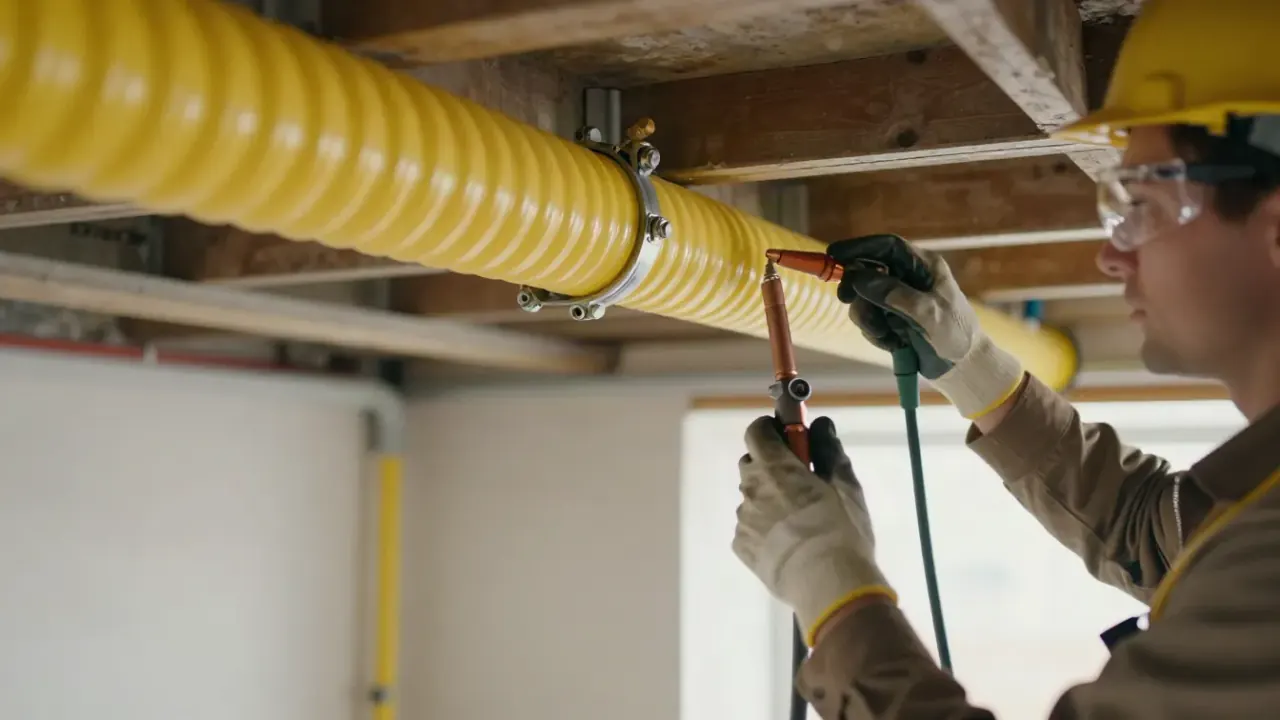
Investing in gas line repair offers numerous advantages that enhance safety and efficiency.
Enhanced Safety
Regular gas line repair significantly reduces the risk of dangerous gas leaks. By addressing potential issues early, homeowners can prevent hazardous situations and ensure their family's safety.
Increased Efficiency
Properly functioning gas lines improve the efficiency of your appliances. This can lead to lower energy bills and a more effective heating system, especially during the colder months in Flower Mound.
Longer Lifespan
Timely gas line servicing in Flower Mound can extend the lifespan of your gas appliances. By addressing wear and tear, you ensure that your systems function optimally for years.
Compliance with Codes
Gas line repairs ensure compliance with the National Fuel Gas Code (NFGC) and local regulations. This is crucial for avoiding fines and ensuring your home passes inspections.
Gas line repair costs in Flower Mound typically range from $180 to $450 in 2026, depending on the complexity of the repair. Factors such as the extent of damage, materials used, and labor involved can affect the final price. Our transparent pricing ensures you know what to expect before we start any work.
Typical Investment Range
$180 - $450 depending on scope
Our pricing reflects the quality of service and materials used, ensuring long-lasting repairs.
What changes the price
Extent of Damage
More extensive damage requires more materials and labor, increasing costs.
Materials Used
The type of piping and fittings required can impact the overall repair cost.
Labor Intensity
Complex repairs that require more time and expertise will cost more.
Google ★★★★★4.9
Quick response and professional service! They fixed my gas leak within hours. Highly recommend!
Yelp ★★★★★4.8
Excellent service! The team was knowledgeable and friendly. They explained everything clearly.
BBB ★★★★★4.7
Very satisfied with the gas line repair. They were prompt and thorough in their work.
With local experience in gas line repair, our team is equipped with the necessary skills and certifications to handle any gas-related issue.

Real experiences from customers who chose our Gas Line Repair services.
“I had a gas leak in my home, and the team responded quickly. They were professional and resolved the issue within hours. Highly recommend!”
Sarah T.
Homeowner, Flower Mound
“Their gas line repair service was excellent. They explained everything and worked efficiently. I felt safe knowing my gas lines were in good hands.”
Mark L.
Business Owner, Lewisville
“I appreciated their 24/7 emergency service. When I had a problem late at night, they were there within an hour. Great service!”
Emily R.
Resident, Highland Village
Several factors shape the scope — and therefore the cost — of gas line work in The Colony. The pipe's age and material matter: replacing a short run of accessible attic piping is a far smaller job than replacing a corroded underground steel service line in clay soil. Access is often the biggest variable — piping buried under a slab, routed through finished walls in a historic home, or running beneath a driveway takes more labor than the same length of pipe in an open crawlspace. Permits and inspections add time and fees, particularly for commercial work downtown or whole-house repipes. And scope drives everything: a single appliance hookup, a targeted leak repair, a partial repipe, and a full system replacement are progressively larger projects. We assess your specific situation and provide a detailed written estimate before any work begins, so you know exactly what the job involves and why.
A home from the 1960s likely has original threaded steel gas piping, now 60-plus years old — well into the age where condition matters more than the calendar. The honest answer is that you cannot tell by looking at the visible parts alone, because the highest-risk component — the underground service line in clay soil — is the one you cannot see. A professional inspection with pressure testing is the way to know: we survey all accessible piping for corrosion and outdated materials, verify appliance connectors and shutoffs, and isolate and pressure-test the underground line independently. If the system holds pressure and the visible piping is sound, you may only need connector updates and minor corrections. If the underground line fails or the visible pipe is broadly corroded, replacement is the responsible call. Either way, you will have facts instead of guesses.
The classic signs: a rotten-egg gas odor near appliances, at the meter, or outdoors; hissing at a joint, valve, or the meter; dead or discolored vegetation in a strip along the underground line's route; and pilot lights that will not stay lit. In older The Colony homes, also watch for subtler clues — appliance flames that burn yellow instead of blue, a stove burner that will not reach full flame, flaking rust on the exterior riser or meter piping, and connectors behind the stove or dryer that look corroded or feel loose. Any of these deserves prompt professional attention. If you smell strong gas odor, leave the area and call the gas utility's emergency line first, then call us for the repair.
The Colony requires permits and inspections for new gas line installations and significant repairs or replacements, as do most Denton County jurisdictions. A simple appliance connector replacement typically does not trigger the permit process, but running new piping, replacing a service line, repiping a house, or installing commercial gas equipment does. Larger projects should be planned with the permit timeline in mind — inspections happen at specific stages, and the work must be visible to the inspector at those stages. We advise on what your project requires and make sure the installation is inspection-ready, so approvals do not slow you down.
Yes — commercial work in The Colony's historic downtown is a specialty of ours. Restaurant conversions in early-1900s buildings need properly engineered gas systems: a load calculation for the full equipment package, adequate service line and meter capacity (coordinated with the utility when an upgrade is needed), new distribution sized for commercial demand, individual shutoffs at each appliance, and installation that works with the building's historic structure. We map existing and abandoned piping before designing, handle the permit process, and build to pass inspection the first time. Because restaurant openings run on tight schedules, we plan the gas scope early with your contractor so it never becomes the bottleneck.
Constant humidity accelerates corrosion on any unprotected steel, and in The Colony the exterior gas piping — the meter riser, the runs along outside walls, lines under pier-and-beam homes — lives in moist air most of the year. Surface rust forms first, then works into threads and fittings, eventually thinning the pipe wall. The fix is protection and vigilance: exterior-rated coatings on exposed piping, keeping lines off soil contact and out of standing water, and replacing sections where corrosion has gone past the surface. During inspections we pay close attention to exterior runs because they deteriorate faster than interior piping. If your meter-area piping shows flaking rust or pitting, have it evaluated — exterior corrosion is visible, which makes it the easiest gas line problem to catch early.
Our gas line installation service ensures your new gas lines are installed safely and comply with local codes, providing reliable service for your home.
View Gas Line InstallationRegular gas line inspections help identify potential issues before they become serious problems, ensuring the safety and efficiency of your gas systems.
View Gas Line InspectionOur gas leak detection service uses advanced technology to locate leaks quickly, preventing hazardous situations and ensuring your home's safety.
View Gas Leak DetectionWe provide professional gas appliance hookup services, ensuring your appliances are connected safely and function optimally for your home.
View Gas Appliance HookupWe're here to help you with your gas line needs. Reach out during business hours for quick responses and assistance.
Phone
(972) 432-5621Address
2209 Texas Pkwy, Flower Mound, TX 77489, USA, Flower Mound, Texas
Hours
Mon–Fri: 7AM – 7PM
Sat: 8AM – 4PM
Sun: Emergency Only
24/7 Emergency Available