
Thorough Inspections
We conduct detailed inspections to identify any issues with your gas lines, ensuring that all potential problems are addressed.
Our gas line repair service includes comprehensive inspections, repairs, and necessary replacements to ensure your gas lines are safe and functional.
We conduct detailed inspections to identify any issues with your gas lines, ensuring that all potential problems are addressed.
Our team specializes in repairing leaks, using high-quality materials to ensure a long-lasting solution.
We ensure all repairs comply with local codes and safety regulations, providing peace of mind for homeowners.
After repairs, we perform safety tests to ensure your gas lines are leak-free and functioning correctly.
The vented-versus-vent-free question comes up in nearly every gas fireplace conversation, and it deserves a straight answer — especially in a humid climate like ours. Vented gas fireplaces, including direct-vent units, send their combustion gases outside through a flue or a sealed vent pipe. Vent-free units have no flue at all; they burn gas so completely that the small amount of combustion byproducts is considered acceptable to release into the room, as long as the room is large enough and the unit is used as directed.
Direct-vent fireplaces are the most common pick for new installations. They use a sealed glass front and a double-wall vent pipe: combustion air comes in from outside through the outer pipe, exhaust leaves through the inner pipe, and room air never mixes with the flame. That sealed design is safe, efficient, and flexible — units can go on interior or exterior walls, vent horizontally or vertically, and run without pulling warm room air up a chimney.
Vent-free fireplaces have real advantages too: no vent pipe to route, higher efficiency since no heat escapes up a flue, and lower installation cost, available as log sets, inserts, and freestanding units. The trade-offs matter here on the North Texas: they add moisture to the room air, which is noticeable in an already-humid Southeast Texas home, they are not right for every room size or situation, and some homeowners simply prefer combustion gases going outside. Local codes can also restrict where vent-free appliances go. We lay out both options factually and help you weigh them for your specific room.
A direct-vent gas fireplace is a sealed system, and that sealed design is what makes it so versatile. Because the unit draws combustion air from outside and exhausts directly outside, it does not compete with the furnace or water heater for indoor air, and it does not create the drafts old wood fireplaces are famous for. The glass front stays sealed during operation, keeping heat in the room and combustion safely isolated.
Every gas fireplace needs a supply line sized for the fireplace's BTU rating plus the distance it travels. A typical gas fireplace draws 20,000 to 40,000 BTU — modest next to a furnace, but enough that an undersized line shows up as a lazy, yellow flame instead of a crisp blue one. Undersized piping can also starve the fireplace when the furnace or water heater kicks on, causing shutdowns or sooting that fouls the glass and logs.
We calculate the required pipe size from the fireplace's input rating and the length of the run from the gas meter or the nearest adequately sized branch. Where the existing system has capacity, we tie in cleanly; where it does not — common in homes whose gas service was sized for the original appliances — we run a new dedicated line or upsize the relevant section. The gas meter gets checked too: adding a fireplace to an already maxed-out meter means coordinating a meter upgrade with CenterPoint Energy, which we flag early so it never becomes a last-minute surprise.
The connection at the fireplace end matters as much as the pipe getting there. We install a manual shutoff valve in an accessible spot near the unit — typically inside the lower access panel area or on the adjacent wall — so gas to the fireplace can be isolated for service without shutting down the whole house. The final connection follows the manufacturer's specifications for connector type and length, and the entire new line is pressure-tested before the fireplace is ever lit.
Pipe sizing is simple physics: gas loses pressure as it flows, and smaller pipe loses it faster. A fireplace at the far end of a long run needs larger pipe than the same fireplace sitting ten feet from the meter. The calculation also accounts for every fitting — each elbow and tee adds the equivalent of several feet of straight pipe in pressure loss. That is why experienced installers measure the actual route, count the fittings, and size from a capacity table instead of eyeballing it.
A gas fireplace is a heating appliance, and heating appliances need clearances — the minimum distances between hot surfaces and anything that can burn. The firebox itself carries manufacturer-specified clearances to framing members, which we follow exactly. But the clearances homeowners actually live with are around the opening: mantels, surround materials, hearth extensions, and nearby furniture.
Mantel clearances generate the most questions. Wood mantels need a minimum distance above and to the sides of the opening, and those distances vary with mantel depth — a deeper shelf needs more clearance above it than a shallow one. Non-combustible surrounds like tile or stone are more forgiving, which is one reason many homeowners choose them. We lay out the clearances from the manufacturer's manual during planning so the finished design complies from day one, not after a failed inspection.
Framing a new fireplace means building a chase — the enclosed structure housing the unit and its venting. The chase needs proper clearances inside, firestop details where the vent passes through floors or the roof, and access provisions for future service. A well-built chase also matters for appearance: it is what makes a new fireplace look like it was always part of the house rather than an afterthought attached to the wall.
The mantel is often the visual centerpiece, and it is also the clearance detail that causes the most inspection headaches. Every gas fireplace ships with a manual specifying exactly how far combustible materials must sit from the opening, usually with a chart relating mantel depth to required height above the firebox. A chunky reclaimed-wood beam looks fantastic but needs more clearance than a slim stone shelf — plan the mantel and the fireplace together, not separately.
01
What we do: Contact us immediately for gas line repair in Flower Mound. Our technicians will locate and fix the leak quickly.
→ This ensures your home is safe and eliminates the risk of gas exposure.
02
What we do: Our team will inspect the gas lines and connections to identify any issues affecting performance.
→ You'll enjoy improved efficiency and reliability from your gas appliances.
03
What we do: We provide gas line servicing in Flower Mound to ensure safe and efficient installations.
→ This guarantees that your new appliances operate safely and effectively.
Gas Line Repair in Flower Mound requires an understanding of local building codes and common issues faced by residents. The humid climate can lead to corrosion in gas lines, making regular inspections essential. Our team is familiar with the unique challenges of the area, ensuring effective and compliant repairs. With gas line servicing in Flower Mound, we address issues promptly to maintain safety and efficiency.
Bridlewood
This neighborhood often experiences gas line issues due to older infrastructure.
Parker Square
Residents here benefit from our prompt gas line repair services, especially during extreme weather.
Lake Forest
We provide thorough inspections to ensure safety in homes with aging gas lines.
High humidity levels in summer
This can accelerate corrosion in gas lines, necessitating regular inspections and repairs.
Frequent temperature fluctuations in winter
These fluctuations can lead to pipe expansion and contraction, increasing the risk of leaks.
Call Gas Line Repair Flower Mound TX at (972) 432-5621 to discuss your gas fireplace project. We will look at the space, check your gas supply, and lay out the options that fit your home — plainly, without pressure.
Our gas line repair services address common issues that can pose risks to your home and family.
Problem
Ignoring gas leaks can lead to dangerous situations, including explosions or health hazards from inhalation.
Our Fix
Our team quickly identifies and repairs leaks, ensuring your gas lines are safe and compliant with local regulations.
Problem
Faulty connections can lead to inefficient appliance operation and increased energy costs.
Our Fix
We repair and replace faulty connections, improving appliance efficiency and reducing energy bills.
Problem
Pressure drops can affect appliance performance, leading to inadequate heating or cooking.
Our Fix
We diagnose and fix pressure issues, ensuring your gas appliances operate at optimal levels.
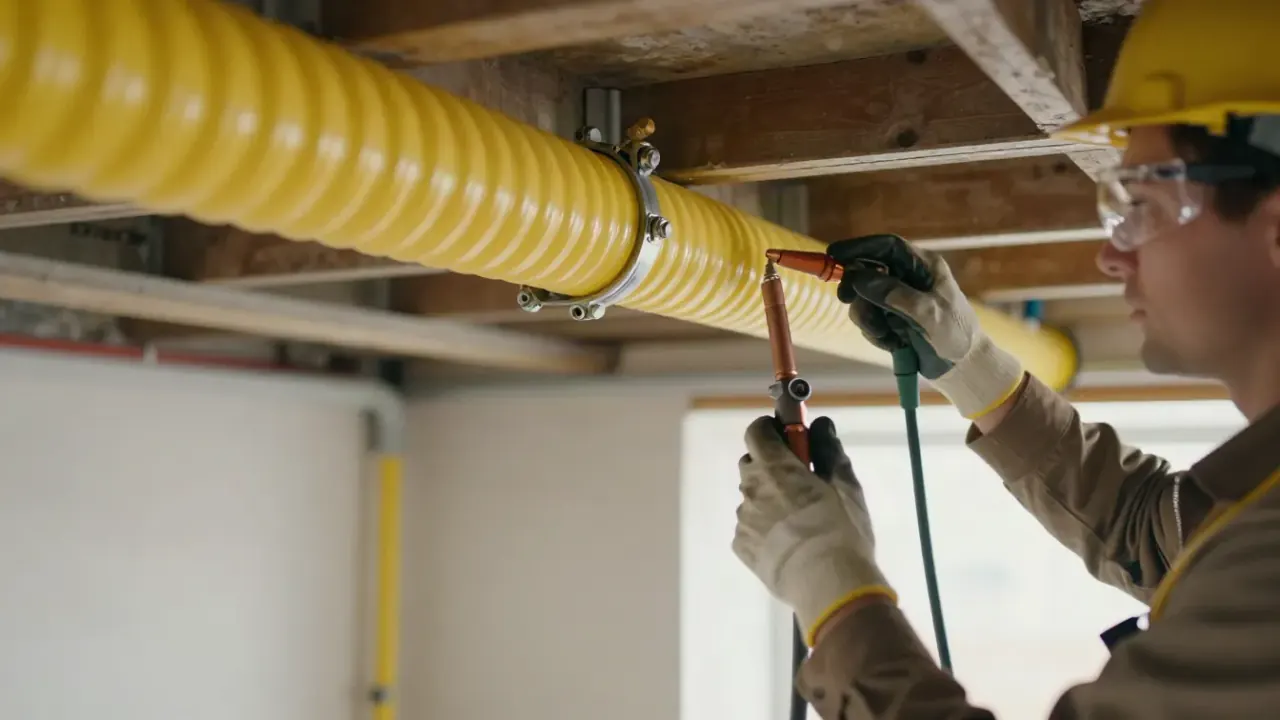
Investing in gas line repair offers numerous advantages that enhance safety and efficiency.
Enhanced Safety
Regular gas line repair significantly reduces the risk of dangerous gas leaks. By addressing potential issues early, homeowners can prevent hazardous situations and ensure their family's safety.
Increased Efficiency
Properly functioning gas lines improve the efficiency of your appliances. This can lead to lower energy bills and a more effective heating system, especially during the colder months in Flower Mound.
Longer Lifespan
Timely gas line servicing in Flower Mound can extend the lifespan of your gas appliances. By addressing wear and tear, you ensure that your systems function optimally for years.
Compliance with Codes
Gas line repairs ensure compliance with the National Fuel Gas Code (NFGC) and local regulations. This is crucial for avoiding fines and ensuring your home passes inspections.
Gas line repair costs in Flower Mound typically range from $180 to $450 in 2026, depending on the complexity of the repair. Factors such as the extent of damage, materials used, and labor involved can affect the final price. Our transparent pricing ensures you know what to expect before we start any work.
Typical Investment Range
$180 - $450 depending on scope
Our pricing reflects the quality of service and materials used, ensuring long-lasting repairs.
What changes the price
Extent of Damage
More extensive damage requires more materials and labor, increasing costs.
Materials Used
The type of piping and fittings required can impact the overall repair cost.
Labor Intensity
Complex repairs that require more time and expertise will cost more.
Google ★★★★★4.9
Quick response and professional service! They fixed my gas leak within hours. Highly recommend!
Yelp ★★★★★4.8
Excellent service! The team was knowledgeable and friendly. They explained everything clearly.
BBB ★★★★★4.7
Very satisfied with the gas line repair. They were prompt and thorough in their work.
With local experience in gas line repair, our team is equipped with the necessary skills and certifications to handle any gas-related issue.

Real experiences from customers who chose our Gas Line Repair services.
“I had a gas leak in my home, and the team responded quickly. They were professional and resolved the issue within hours. Highly recommend!”
Sarah T.
Homeowner, Flower Mound
“Their gas line repair service was excellent. They explained everything and worked efficiently. I felt safe knowing my gas lines were in good hands.”
Mark L.
Business Owner, Lewisville
“I appreciated their 24/7 emergency service. When I had a problem late at night, they were there within an hour. Great service!”
Emily R.
Resident, Highland Village
Expect two to three days for the gas line and fireplace work, plus lead time for permitting and inspection scheduling. Setting an insert or log set into an existing fireplace usually moves faster than framing, venting, and finishing a brand-new unit. We will map out a realistic timeline for your project at the site visit.
A gas log set is the simplest option: ceramic logs and a burner placed in your existing fireplace, used mostly for appearance with modest heat. A gas insert is a sealed firebox that fits inside the existing opening and delivers much more usable heat into the room. If heating the space matters to you, the insert is the stronger choice; if you mainly want the look of a flame, logs may be enough.
They can be, installed per the manufacturer's instructions and local code — correct room sizing, proper clearances, and a working oxygen depletion sensor. Still, plenty of homeowners prefer direct-vent's sealed combustion sending everything outside, and some jurisdictions limit where vent-free units may go. We will give you a straight comparison for your room.
Usually, yes. An insert slides into the firebox and vents through the existing chimney with a liner; a log set is simpler still. We start by inspecting the firebox and chimney — if the chimney is deteriorated, it may need repair or a liner before it can safely carry a gas appliance.
Many will. Units with millivolt or battery-backup ignition light without household power — a genuine plus during hurricane-season outages — and radiant models heat with no electricity at all. Units with standard electronic ignition will not light in an outage unless they have battery backup. Tell us if outage performance matters and we will steer you to the right ignition type.
Once a year is the standard: glass and burner cleaning, ignition check, venting inspection, gas connection verification. Since the unit sits idle through Southeast Texas summers, schedule it in the fall — we routinely find spider webs in burner ports and corroded remote batteries after the long off-season.
Most gas fireplace projects need a permit from the City of Flower Mound, covering both the gas line work and the appliance installation, with an inspection before the unit goes into service. We handle the permit paperwork and schedule the inspection as part of the job.
Bedrooms are sometimes workable; bathrooms generally are not, because code restricts gas appliances around moisture and the clearances get difficult. Most units are designed for living rooms, dens, and bedrooms where ventilation and clearances can be handled properly. Describe the spot you have in mind and we will give you an honest answer.
Our gas line installation service ensures your new gas lines are installed safely and comply with local codes, providing reliable service for your home.
View Gas Line InstallationRegular gas line inspections help identify potential issues before they become serious problems, ensuring the safety and efficiency of your gas systems.
View Gas Line InspectionOur gas leak detection service uses advanced technology to locate leaks quickly, preventing hazardous situations and ensuring your home's safety.
View Gas Leak DetectionWe provide professional gas appliance hookup services, ensuring your appliances are connected safely and function optimally for your home.
View Gas Appliance HookupWe're here to help you with your gas line needs. Reach out during business hours for quick responses and assistance.
Phone
(972) 432-5621Address
2209 Texas Pkwy, Flower Mound, TX 77489, USA, Flower Mound, Texas
Hours
Mon–Fri: 7AM – 7PM
Sat: 8AM – 4PM
Sun: Emergency Only
24/7 Emergency Available