
Thorough Inspections
We conduct detailed inspections to identify any issues with your gas lines, ensuring that all potential problems are addressed.
Our gas line repair service includes comprehensive inspections, repairs, and necessary replacements to ensure your gas lines are safe and functional.
We conduct detailed inspections to identify any issues with your gas lines, ensuring that all potential problems are addressed.
Our team specializes in repairing leaks, using high-quality materials to ensure a long-lasting solution.
We ensure all repairs comply with local codes and safety regulations, providing peace of mind for homeowners.
After repairs, we perform safety tests to ensure your gas lines are leak-free and functioning correctly.
Every commercial gas installation starts upstream at the meter, and commercial metering differs from residential in ways that matter for any project. Commercial meters are sized to the building's total connected load, and the gas utility determines the meter size and service pressure based on the equipment list. When a business adds equipment — a new oven, an additional water heater, a patio heater array — the meter and service may need to be upsized too, which involves the utility and lead time. Planning equipment additions should always include a check of meter capacity.
Regulators are the other key commercial component. Gas arrives from the utility at a higher pressure than appliances use, and regulators step it down to the working pressure each part of the system needs. Commercial systems often use a two-stage arrangement: a service regulator at the meter reducing utility pressure to building pressure, then appliance or line regulators fine-tuning pressure for specific equipment. Restaurants with high-BTU cooking lines, buildings with long pipe runs, and properties mixing different appliance types all depend on correct regulator selection and setting. A failing regulator shows up as fluctuating flames, appliances that will not stay lit, or pressure that drifts — all fixable once diagnosed.
Sizing ties it all together. Pipe must be large enough that pressure at the farthest appliance stays within the required range when everything runs at once. Undersized commercial piping is a common find in older buildings and in spaces where equipment was added piecemeal over the years without rechecking the math. A proper load calculation — adding up the BTU ratings of every connected appliance and sizing pipe runs accordingly — is the foundation of any commercial installation or upgrade, and it is also the diagnostic starting point when performance problems appear.
Residential meters are small, standardized, and sized for a predictable range of home loads. Commercial meters come in a range of sizes matched to the building's demand, and selecting the right one is the utility's call based on the total connected load you report. This matters because meter capacity is a hard ceiling: if the meter cannot pass enough gas, no amount of correctly sized interior piping will fix the shortfall. Businesses planning expansions, kitchen remodels, or equipment additions should verify meter capacity early in the planning process, since utility-side upgrades take time to schedule.
For a business, the schedule of gas work matters almost as much as the quality of it. A restaurant that loses gas during the dinner rush loses the night's revenue. An office building without heat during a January cold snap sends everyone home. A hotel without hot water hears about it from every guest. Minimizing downtime is therefore a central part of commercial gas service — not an afterthought.
The main tool is scheduling. Whenever the work allows it, we schedule shutdowns for off-hours: overnight for restaurants, weekends for offices, low-occupancy windows for multi-unit properties. The project is planned so that the shutdown window is as short as possible — materials staged in advance, the work sequence mapped, the inspection pre-scheduled so there is no dead time waiting for sign-off. For repairs, we stock common commercial fittings and valves so a fix does not wait on a parts run.
Communication is the other half. The business owner or property manager needs a clear picture before work starts: exactly when the gas goes off, how long it stays off, what will not work during that window, and when service returns. For multi-tenant properties, that information has to reach every affected tenant in advance. We coordinate with whoever manages the property to make sure notices go out and the plan is understood, because a well-informed tenant is far more accommodating than a surprised one.
The ideal time to do disruptive gas work is when the business feels it least. For restaurants, that usually means overnight between closing and morning prep, or on a scheduled closed day. For offices, weekends or holidays. For retail, early mornings before opening. We work with the business to find these windows and then plan the job to fit inside them — which sometimes means splitting a larger project across several off-hours sessions rather than one long shutdown.
Routine inspection is the most cost-effective commercial gas service there is. A scheduled inspection finds the corroded riser, the aging connector, the regulator drifting out of adjustment, or the joint beginning to seep — while each is still a minor fix. The alternative is discovering these problems as emergencies: a leak that shuts down the kitchen on a Friday night, a failed water heater with no hot water for guests, a regulator failure that takes equipment offline. Prevention is not just cheaper; it protects the business from the worst possible timing.
A commercial gas inspection is systematic. The technician walks the entire system from the meter inward: the meter assembly and service regulator, exterior risers and exposed piping, interior distribution piping, every branch and valve, and each appliance connection. Accessible joints are checked with detection equipment. Appliance connectors are examined for age, kinking, and damage. Regulators are checked for correct operation. Venting and combustion air for gas appliances get a look as well, since safe operation depends on more than the piping. Findings are documented in a written report with clear priorities — what needs attention now, what to watch, and what is in good shape.
For property managers overseeing multiple buildings or multi-unit properties, inspections create something valuable beyond safety: a baseline. With a documented condition report for each property, maintenance becomes planned instead of reactive. You know which buildings have aging pipe, which meters are nearing capacity, and where the next dollar of maintenance should go. That kind of planning is difficult without ever having looked at the system.
A thorough commercial inspection covers the full gas path. It starts at the meter: the meter's condition, the shutoff valve's operation, the service regulator's setting and performance. Exterior piping and risers are checked for corrosion, physical damage, and proper support — the transition from underground to above ground is a known trouble spot. Inside, the technician follows the distribution piping through utility rooms, ceilings, and chases, checking supports, protection where pipe passes through structure, and the condition of every accessible joint and valve.
01
What we do: Contact us immediately for gas line repair in Flower Mound. Our technicians will locate and fix the leak quickly.
→ This ensures your home is safe and eliminates the risk of gas exposure.
02
What we do: Our team will inspect the gas lines and connections to identify any issues affecting performance.
→ You'll enjoy improved efficiency and reliability from your gas appliances.
03
What we do: We provide gas line servicing in Flower Mound to ensure safe and efficient installations.
→ This guarantees that your new appliances operate safely and effectively.
Gas Line Repair in Flower Mound requires an understanding of local building codes and common issues faced by residents. The humid climate can lead to corrosion in gas lines, making regular inspections essential. Our team is familiar with the unique challenges of the area, ensuring effective and compliant repairs. With gas line servicing in Flower Mound, we address issues promptly to maintain safety and efficiency.
Bridlewood
This neighborhood often experiences gas line issues due to older infrastructure.
Parker Square
Residents here benefit from our prompt gas line repair services, especially during extreme weather.
Lake Forest
We provide thorough inspections to ensure safety in homes with aging gas lines.
High humidity levels in summer
This can accelerate corrosion in gas lines, necessitating regular inspections and repairs.
Frequent temperature fluctuations in winter
These fluctuations can lead to pipe expansion and contraction, increasing the risk of leaks.
Our gas line repair services address common issues that can pose risks to your home and family.
Problem
Ignoring gas leaks can lead to dangerous situations, including explosions or health hazards from inhalation.
Our Fix
Our team quickly identifies and repairs leaks, ensuring your gas lines are safe and compliant with local regulations.
Problem
Faulty connections can lead to inefficient appliance operation and increased energy costs.
Our Fix
We repair and replace faulty connections, improving appliance efficiency and reducing energy bills.
Problem
Pressure drops can affect appliance performance, leading to inadequate heating or cooking.
Our Fix
We diagnose and fix pressure issues, ensuring your gas appliances operate at optimal levels.
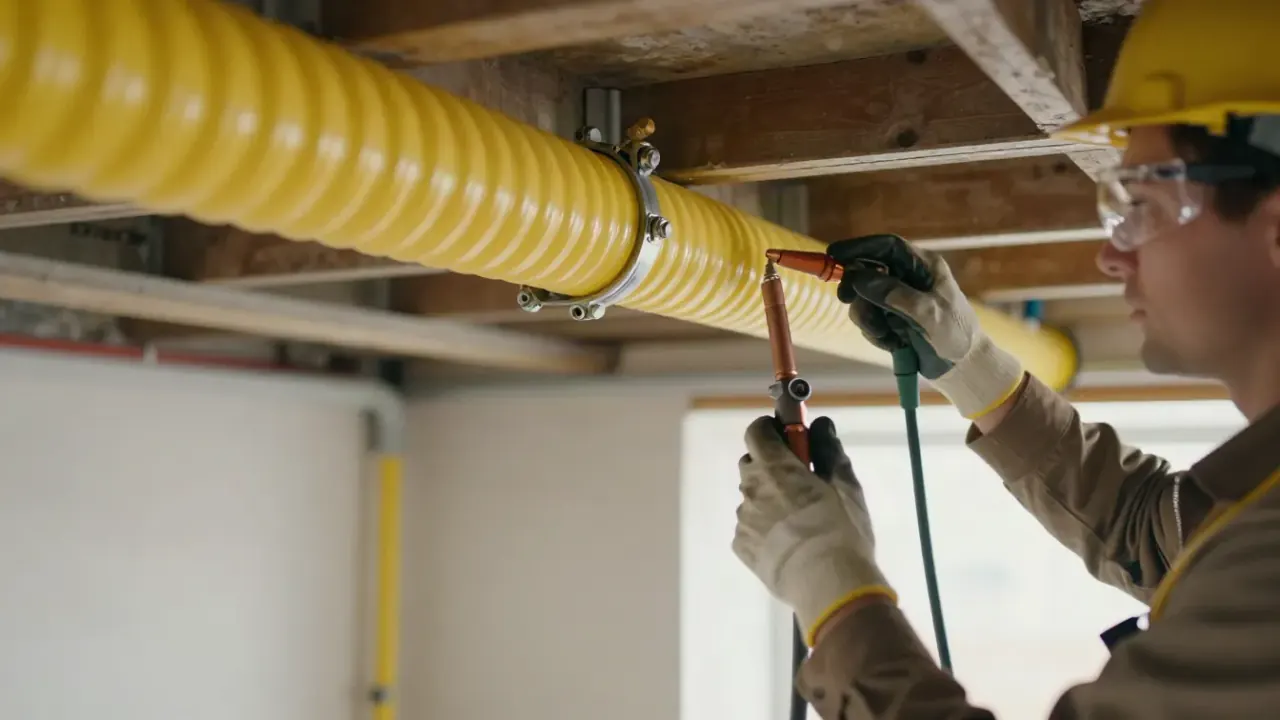
Investing in gas line repair offers numerous advantages that enhance safety and efficiency.
Enhanced Safety
Regular gas line repair significantly reduces the risk of dangerous gas leaks. By addressing potential issues early, homeowners can prevent hazardous situations and ensure their family's safety.
Increased Efficiency
Properly functioning gas lines improve the efficiency of your appliances. This can lead to lower energy bills and a more effective heating system, especially during the colder months in Flower Mound.
Longer Lifespan
Timely gas line servicing in Flower Mound can extend the lifespan of your gas appliances. By addressing wear and tear, you ensure that your systems function optimally for years.
Compliance with Codes
Gas line repairs ensure compliance with the National Fuel Gas Code (NFGC) and local regulations. This is crucial for avoiding fines and ensuring your home passes inspections.
Gas line repair costs in Flower Mound typically range from $180 to $450 in 2026, depending on the complexity of the repair. Factors such as the extent of damage, materials used, and labor involved can affect the final price. Our transparent pricing ensures you know what to expect before we start any work.
Typical Investment Range
$180 - $450 depending on scope
Our pricing reflects the quality of service and materials used, ensuring long-lasting repairs.
What changes the price
Extent of Damage
More extensive damage requires more materials and labor, increasing costs.
Materials Used
The type of piping and fittings required can impact the overall repair cost.
Labor Intensity
Complex repairs that require more time and expertise will cost more.
Google ★★★★★4.9
Quick response and professional service! They fixed my gas leak within hours. Highly recommend!
Yelp ★★★★★4.8
Excellent service! The team was knowledgeable and friendly. They explained everything clearly.
BBB ★★★★★4.7
Very satisfied with the gas line repair. They were prompt and thorough in their work.
With local experience in gas line repair, our team is equipped with the necessary skills and certifications to handle any gas-related issue.

Real experiences from customers who chose our Gas Line Repair services.
“I had a gas leak in my home, and the team responded quickly. They were professional and resolved the issue within hours. Highly recommend!”
Sarah T.
Homeowner, Flower Mound
“Their gas line repair service was excellent. They explained everything and worked efficiently. I felt safe knowing my gas lines were in good hands.”
Mark L.
Business Owner, Lewisville
“I appreciated their 24/7 emergency service. When I had a problem late at night, they were there within an hour. Great service!”
Emily R.
Resident, Highland Village
The main differences are scale and operational impact. Commercial systems carry much higher BTU loads — a restaurant kitchen can use more gas in an hour than a home uses in a week — so pipe sizing, meter capacity, and regulator selection are more critical. Commercial work also involves permits, inspections, and coordination with business operations, since downtime costs money. Planning the schedule is as important as the technical work.
Yes — off-hours scheduling is standard for commercial gas work. Restaurants are typically serviced overnight or on closed days, offices on weekends, and retail during early mornings before opening. We scope the job fully in advance, pre-stage materials, and pre-schedule inspections so the shutdown window is as short as possible and the business can rely on the plan.
In most Southeast Texas municipalities, commercial gas piping work requires a permit from the building department, and the finished work must pass inspection before service is restored. We handle the permit application as part of the project and coordinate the inspection timing. Keeping the documentation matters too — permitted, inspected work protects you with insurers, inspectors, and future property transactions.
We plan around it. Work is scheduled for your slowest hours or closed days, materials are staged in advance, and larger projects are phased so the actual gas shutdown is one short, planned window rather than days of downtime. For water heating, temporary units can sometimes bridge a replacement. You will know the exact shutdown times before work begins so you can plan staffing and service around them.
Restaurants and other heavy-use facilities benefit from annual inspections, since heat, moisture, and constant operation age components faster. Multi-unit properties do well with annual or biennial inspections, and lighter-use offices and retail can typically follow a two-year cycle. Any building with aging pipe, recent equipment changes, or a prior leak should be checked more often regardless of the standard interval.
Possibly — it depends on whether the current system has spare capacity. Every appliance adds BTU load, and the pipe, regulators, and meter must handle the new total at peak demand. We start with a load calculation based on your equipment list and check it against the existing pipe sizes and meter capacity. If an upgrade is needed, we will show you exactly where and why, and coordinate any utility-side meter work.
Yes. Multi-unit properties have their own patterns — shared risers, multiple meters or a master meter, long branch runs, and the need to coordinate access to occupied units. We handle inspections, repairs, and upgrades for these buildings, and we work with property managers on tenant notification and scheduling so the work proceeds smoothly across all affected units.
Our gas line installation service ensures your new gas lines are installed safely and comply with local codes, providing reliable service for your home.
View Gas Line InstallationRegular gas line inspections help identify potential issues before they become serious problems, ensuring the safety and efficiency of your gas systems.
View Gas Line InspectionOur gas leak detection service uses advanced technology to locate leaks quickly, preventing hazardous situations and ensuring your home's safety.
View Gas Leak DetectionWe provide professional gas appliance hookup services, ensuring your appliances are connected safely and function optimally for your home.
View Gas Appliance HookupWe're here to help you with your gas line needs. Reach out during business hours for quick responses and assistance.
Phone
(972) 432-5621Address
2209 Texas Pkwy, Flower Mound, TX 77489, USA, Flower Mound, Texas
Hours
Mon–Fri: 7AM – 7PM
Sat: 8AM – 4PM
Sun: Emergency Only
24/7 Emergency Available